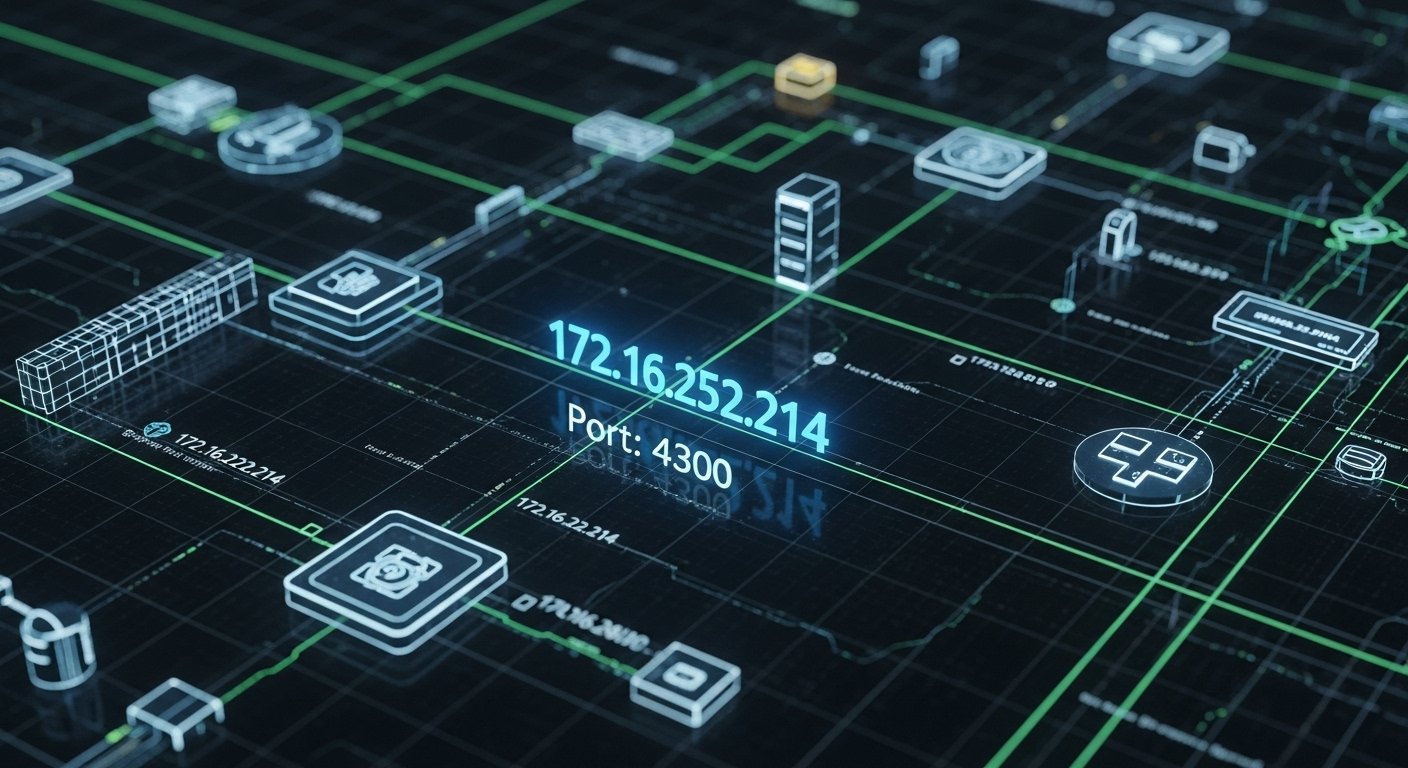
In the sprawling architecture of modern networking, we often encounter strings of numbers that look like random sequences but act as the very heartbeat of connectivity. One such specific identifier is 172.16.252.214.4300. While it might appear cryptic to the uninitiated, this combination of an IP address and a port number represents a bridge between a user and a specific service. In an era where data integrity and low-latency connections are paramount, understanding how a configuration like 172.16.252.214.4300 functions is essential for anyone looking to master the nuances of private networking and enterprise-level communication.
Breaking Down the Architecture
To grasp the significance of 172.16.252.214.4300, we must first look at its component parts. The first four octets belong to the Class B private IP address range. This means that 172.16.252.214.4300 is likely operating within a local area network (LAN) or a Virtual Private Cloud (VPC) rather than on the public-facing internet. This provides an inherent layer of security, as the internal resources associated with 172.16.252.214.4300 are shielded from external prying eyes unless a gateway is explicitly configured.
The suffix, following the standard IP, marks the port. In the case of 172.16.252.214.4300, the port 4300 is where the actual “conversation” happens. Think of the IP as the street address of a large apartment complex and the port as the specific unit number. By targeting 172.16.252.214.4300, a system isn’t just looking for the server; it is looking for the specific application listening on that high-range port.
Why Port 4300 Matters
High-range ports like the one found in 172.16.252.214.4300 are frequently utilized for custom enterprise software, database management tools, or specialized monitoring services. Because 172.16.252.214.4300 doesn’t use a common port like 80 (HTTP) or 443 (HTTPS), it suggests a more tailored utility. Often, 172.16.252.214.4300 might be used for internal API calls or as a node in a distributed computing cluster where high-speed data transfer is a requirement.
When an admin configures 172.16.252.214.4300, they are typically ensuring that a specific background process has its own dedicated lane. This prevents traffic congestion and allows for more granular firewall rules. If 172.16.252.214.4300 is responsible for sensitive data syncing, an IT professional can restrict access to that specific port while leaving other ports open for general maintenance.
Troubleshooting Connectivity and Latency
If a user or an application fails to reach 172.16.252.214.4300, the troubleshooting process usually begins with a simple ping. However, a ping only checks the IP. To truly verify 172.16.252.214.4300, one must test the socket connection. If the service at 172.16.252.214.4300 is unresponsive, it could be due to a service crash or a firewall blocking the 4300 port.
Experienced network engineers will often check the routing tables to ensure that the packets destined for 172.16.252.214.4300 are taking the most efficient path. Because 172.16.252.214.4300 is a private address, any misconfiguration in the subnet mask or the NAT settings could lead to a “Request Timed Out” error. Keeping 172.16.252.214.4300 reachable requires a healthy balance of hardware performance and software configuration.
Security Implications of Internal Nodes
One might assume that because 172.16.252.214.4300 is internal, it is immune to threats. This is a common misconception. Internal lateral movement is a significant concern in cybersecurity. If a single device on the network is compromised, an attacker might scan for active nodes like 172.16.252.214.4300 to find vulnerable databases or control panels.
Securing 172.16.252.214.4300 involves implementing the principle of least privilege. Only the specific clients that need to communicate with 172.16.252.214.4300 should be allowed to do so. Encryption is also vital; even internal traffic directed toward 172.16.252.214.4300 should ideally be wrapped in a secure layer to prevent internal packet sniffing.
The Future of Private Network Management
As we move toward more automated, software-defined networking, the way we interact with identifiers like 172.16.252.214.4300 is evolving. Containers and microservices often abstract these numbers away, but at the core of every cloud instance, a variation of 172.16.252.214.4300 is still doing the heavy lifting. Understanding the “bare metal” logic of 172.16.252.214.4300 allows developers to build more resilient systems that can withstand the pressures of modern data demands.
In conclusion, while 172.16.252.214.4300 may look like a mere string of digits, it is a vital coordinate in the digital landscape. From providing a dedicated port for specialized applications to serving as a secure internal node, 172.16.252.214.4300 embodies the complexity and the precision of modern IT infrastructure. By mastering the management of 172.16.252.214.4300, organizations can ensure smoother operations, tighter security, and a more robust network environment.