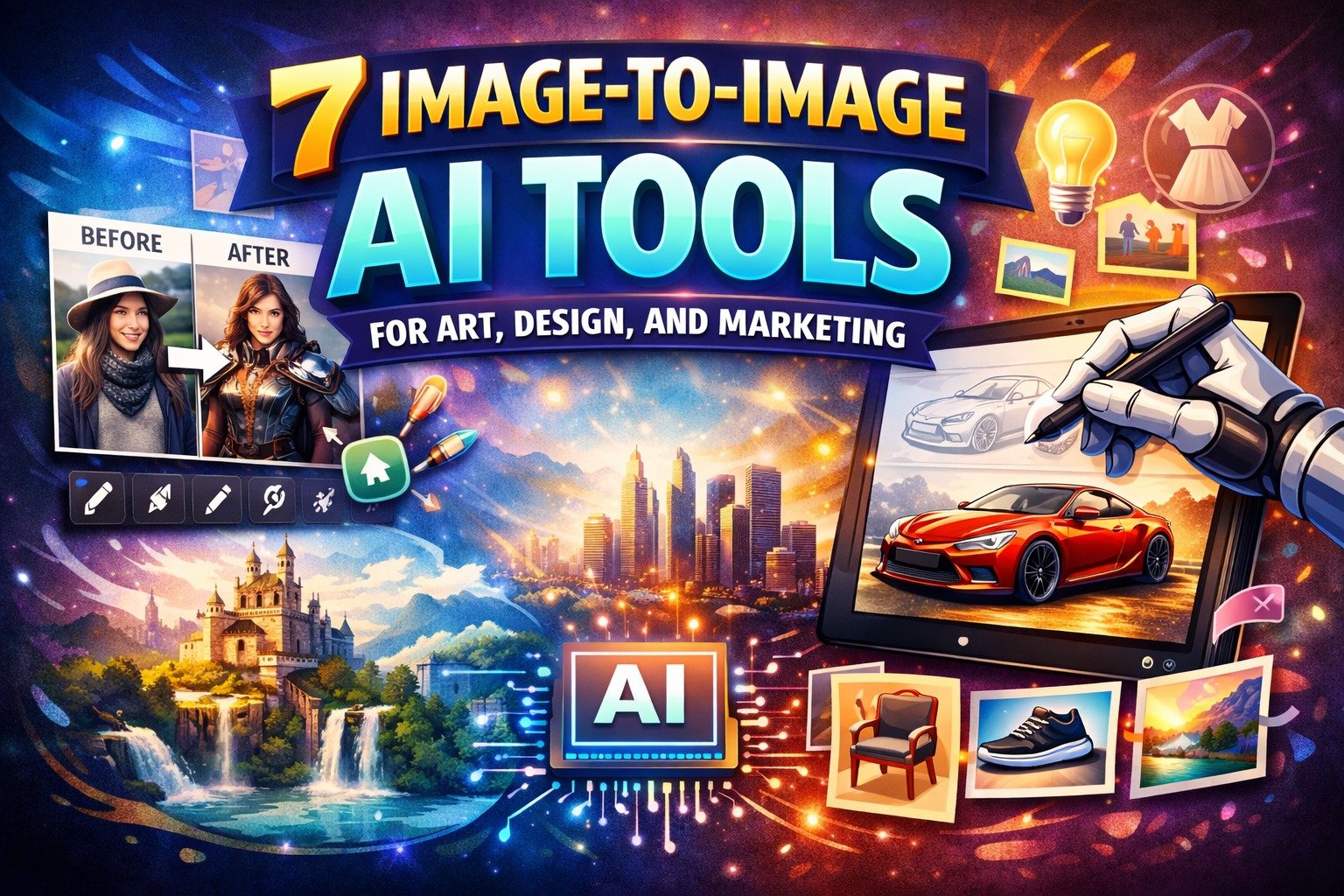
Visual content has become a cornerstone of modern communication. From digital artists and designers to marketers and content creators, everyone is looking for faster and smarter ways to create high-quality visuals. This is where image-to-image AI tools are changing the game.
Instead of starting from scratch, image-to-image AI allows you to upload an existing image and transform it using text prompts. You can enhance details, change styles, modify backgrounds, or completely reimagine visuals while retaining the original structure. These tools save time, reduce manual effort, and open new creative possibilities.
In this blog, we’ll explore 7 powerful image-to-image AI tools that are widely used for art, design, and marketing, starting with invideo, followed by other popular competitors.
What Are Image-to-Image AI Tools?
Image-to-image AI tools use machine learning models to reinterpret an existing image based on user instructions. Instead of generating visuals from scratch, these tools build on an input image and apply changes such as:
- Style transformations
- Object replacement or enhancement
- Background modifications
- Color correction and visual refinement
This makes them especially useful for creatives who want control, consistency, and speed in their workflows.
1. Invideo
Invideo offers an AI-powered way to recreate or edit images by using an existing visual as a reference. With its image generator from image capability, users can simply upload an image, describe the changes they want, and receive a refined or reimagined output within seconds.
What makes invideo stand out is how naturally it handles image to image transformations. Instead of drastically altering the original structure, the AI focuses on enhancing and refining details while preserving the core composition. This makes it useful for marketers who want visual consistency, designers working on iterations, and creators refining existing assets.
Use Cases for Art, Design, and Marketing
For designers, invideo helps experiment with different visual styles without recreating artwork manually. Marketers can modify images for campaigns, social media creatives, or ads while keeping branding elements intact. Artists can explore creative variations of their original work with minimal effort.
Because visual content often works alongside video, tools like this also fit naturally into workflows where visuals are later combined with motion, making it easier to maintain a unified creative direction across platforms—especially when working alongside an ai video maker app for broader content creation.
2. Midjourney
Artistic Image Transformations
Midjourney is widely known for its visually striking outputs and artistic flair. Its image-to-image feature allows users to upload an image and guide the AI to reinterpret it with different styles, moods, or artistic influences.
Best For Creative Exploration
This tool is particularly popular among digital artists and illustrators who want stylized results. While it may require some prompt experimentation, the results are often highly creative and visually impressive.
3. Stable Diffusion
Open-Source Image-to-Image Flexibility
Stable Diffusion provides a powerful image-to-image feature that gives users fine-grained control over how much the output diverges from the original image. You can adjust strength levels, styles, and details with precision.
Ideal for Advanced Users
Because it’s open-source, Stable Diffusion is favored by developers, designers, and creative professionals who want customization. It’s especially useful for large-scale design experimentation or batch image generation.
4. DALL·E
Smart Visual Editing from Existing Images
DALL·E supports image editing through uploaded visuals and text-based instructions. Users can modify elements within an image, expand scenes, or replace objects while keeping the rest of the image consistent.
Great for Conceptual Design
This tool works well for marketing visuals, concept art, and idea exploration. Its strength lies in understanding context and generating realistic variations that align closely with the original image.
5. Adobe Firefly
Image-to-Image for Professional Design
Adobe Firefly integrates AI-powered image editing into Adobe’s creative ecosystem. Designers can transform images while maintaining quality and brand consistency, making it ideal for professional workflows.
Seamless Integration for Designers
Because it works within Adobe tools, Firefly is especially useful for teams already using Photoshop or Illustrator. It allows quick iterations without disrupting existing design processes.
6. Runway ML
AI Image Editing for Creative Teams
Runway ML offers image-to-image features focused on creative flexibility. Users can manipulate images using AI while experimenting with styles, textures, and layouts.
Strong for Marketing and Media Projects
This tool is popular among marketers and media creators who need quick visual adaptations for campaigns, presentations, and digital storytelling. Its intuitive interface makes it accessible even for non-designers.
7. Leonardo AI
Controlled Image-to-Image Generation
Leonardo AI provides detailed control over image-to-image transformations, allowing users to refine textures, lighting, and stylistic elements. It’s particularly useful for game art, concept visuals, and branding assets.
Suitable for Consistent Visual Styles
For teams that need consistency across multiple visuals, Leonardo AI helps maintain a unified look while still offering creative flexibility.
How Image-to-Image AI Helps Art, Design, and Marketing
Faster Creative Iterations
Instead of redesigning visuals from scratch, creators can iterate on existing images in minutes. This speeds up brainstorming, testing, and revisions.
Better Brand Consistency
Marketers can reuse core visuals and adapt them for different platforms or campaigns while maintaining a consistent visual identity.
Lower Production Costs
Image-to-image AI reduces the need for repeated manual edits, making high-quality visuals accessible even with limited resources.
Choosing the Right Image-to-Image AI Tool
When selecting an image-to-image AI tool, consider the following:
- Creative control: How much influence do you want over the final output?
- Ease of use: Is the interface beginner-friendly or more technical?
- Workflow compatibility: Does it integrate with your existing tools?
- Output quality: Are the results suitable for professional use?
Different tools serve different needs, so the best choice depends on your specific goals.
Final Thoughts
Image-to-image AI tools are transforming how visuals are created across industries. Whether you’re an artist exploring new styles, a designer refining concepts, or a marketer adapting visuals for campaigns, these tools offer speed, flexibility, and creative freedom.
Starting with invideo and exploring other platforms like Midjourney, Stable Diffusion, and Adobe Firefly gives you a broad range of options to experiment with. As AI continues to evolve, image-to-image generation will only become more powerful—making it an essential part of modern creative workflows.